


Personal Loan Interest Rates: What Affects Your Rate?
Discover what impacts your personal loan interest rate and learn practical steps to find a low interest personal loan from the right bank for your needs.
Managing your money doesn't have to be complicated. If you're planning to take a personal loan for a wedding, a home repair, medical bills, or just to smooth out monthly expenses, one number matters more than most: your interest rate. It affects how much you pay each month, how much money you have left for other expenses, and how quickly you can reach your financial goals.
The good news is that your personal loan interest rate isn't random. A few clear factors influence it, and once you understand them, you're in a much better position to get an interest rate that works in your favour.
Table of Contents :
- What Decides Your Personal Loan Interest Rate?
- Fixed Vs Floating: How Personal Loan Rates Work?
- How To Find The Best Bank For Personal Loan Needs?
- Simple Ways To Get A Low Interest Personal Loan
- Conclusion
- FAQs
What Decides Your Personal Loan Interest Rate?
People searching for phrases like ‘loan interest rate personal loan’ need to know that lenders look at several factors before deciding on their interest rate. These checks aren't meant to make things difficult. They simply help the lender understand whether the loan is affordable for you.
- Your Credit Score
This is usually the first thing a lender checks. A higher credit score tells them you've handled credit well in the past, which often means a better interest rate. If your credit score needs a boost, small steps like paying bills on time and keeping credit card balances low can help strengthen your credit profile over time.
- Your Income And Job Stability
Steady income gives lenders confidence. Whether you're salaried or self-employed, showing consistent earnings helps you access better personal loan rates. The consistency of your income often matters more than the amount you earn.
- Loan Amount And Tenure
Borrow a smaller amount over a shorter tenure, and you'll often see a lower interest rate. A longer loan tenure spreads your EMIs over more months, making them easier to manage. However, you may end up paying more interest over the life of the loan. Choose a tenure that fits both your budget and your financial goals.
- Your Relationship With The Lender
If you already have a relationship with the lender, such as a salary account or previous loans that were repaid on time, you may have access to better interest rates. Every lender has different policies, so it's a good idea to check what offers are available to you.
Fixed Vs Floating: How Personal Loan Rates Work?
Most personal loans come with a fixed interest rate, which means your EMI stays the same for the entire tenure of the loan. This makes budgeting simple. You know exactly what's leaving your account every month, whether it's going toward EMIs, groceries, or fuel.
Floating rates exist too, though they're less common for personal loans. These move with market conditions, so your EMI can shift slightly over time. If predictability matters to you, a fixed rate is usually the more comfortable choice.
How To Find The Best Bank For Personal Loan Needs?
Finding the best personal loan doesn't mean choosing the first offer you see. Take a little time to compare your options by looking at the following:
- Compare more than the interest rate: Look at processing fees, prepayment charges, and how quickly funds reach your bank account.
- Check for pre-approved offers: If you already have a relationship with a bank, you might qualify for a faster, smoother process.
- Read the fine print on tenure flexibility: Some lenders let you adjust your repayment plan if your income changes.
- Use a loan comparison platform: Compare interest rates, loan terms, and eligibility requirements from multiple lenders in one place before making your decision.
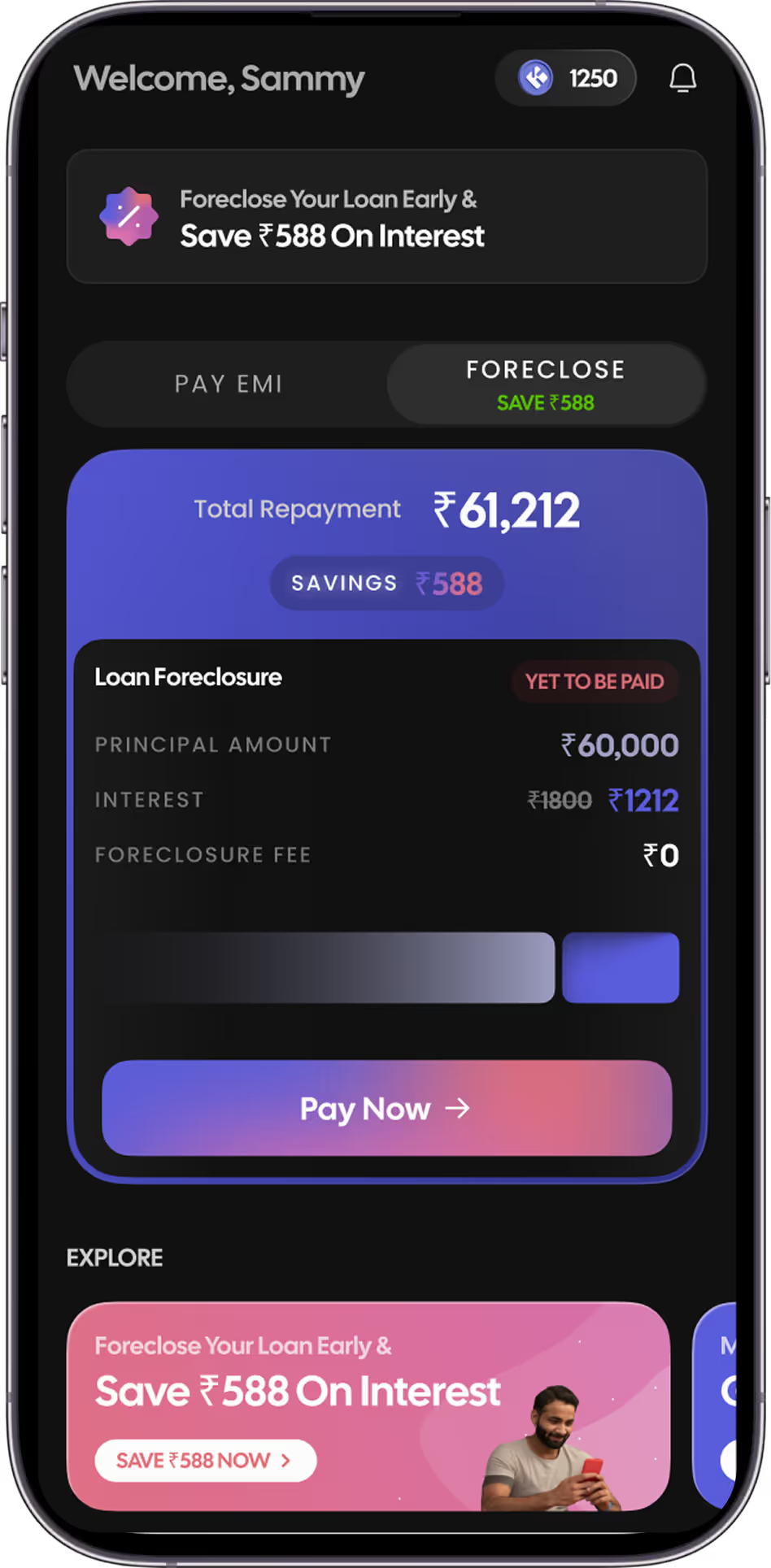
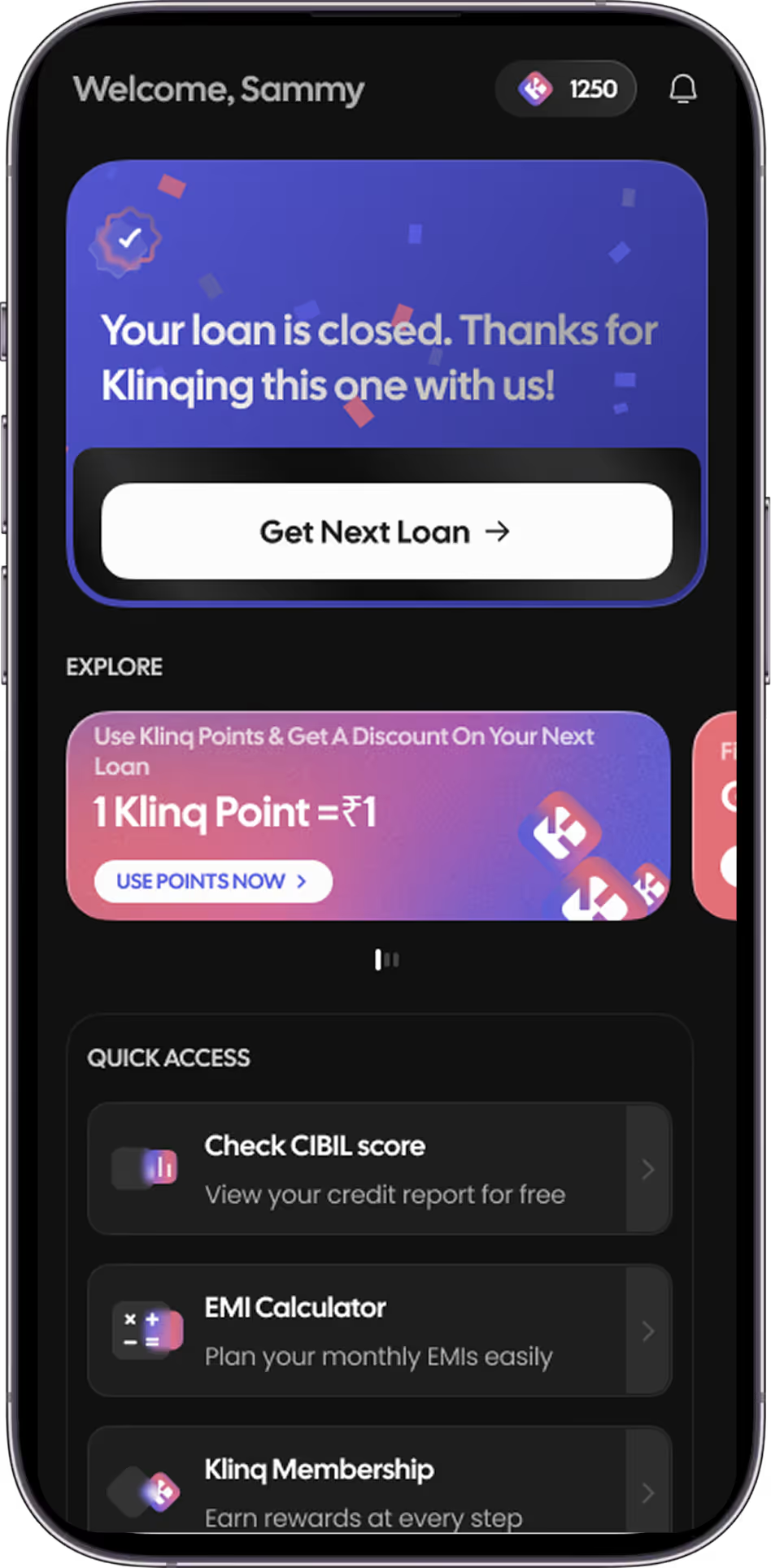
If you're comparing multiple loan options, Klinq lets you explore personal loan offers through a simple digital process. You can also use its CIBIL Checker and EMI Calculator to understand your eligibility and estimate your monthly repayments before applying.
Simple Ways To Get A Low Interest Personal Loan
You don't need a perfect financial history to qualify for a low interest personal loan. Here are some small habits that make a real difference:
- Check your credit score first: Knowing where you stand helps you set realistic expectations before you apply for a personal loan.
- Keep your existing EMIs and bills in check: Lenders like to see that you're managing your current monthly expenses well.
- Avoid applying to too many lenders at once: Multiple applications in a short span can impact your credit score negatively. Make sure to compare quietly first, then apply for a loan where it makes sense.
- Consider a co-applicant: Adding a spouse or family member with a stable income can sometimes get you a better interest rate.
- Ask about relationship-based discounts: Your salary account bank may offer better personal loan interest rates than a new lender would. Make sure to check if that is available to you as an option.
Once you've shortlisted your options, Klinq can make the process easier with a quick online application, flexible repayment options, and tools that help you make informed borrowing decisions. Taking a few minutes to compare your options first can help you choose a loan that suits your financial needs.
Conclusion
Your personal loan interest rate comes down to a handful of things you can actually influence: your credit score, your income stability, how much you borrow, and how long you take to repay it.
Take it one step at a time. Check your credit score, compare a few lenders, and look at the total cost of the loan, not just the interest rate. That's how you find the best bank for personal loan needs and walk away with terms that actually work for you.
Once you've done your homework, Klinq can help you compare personal loan options, check your eligibility, and use tools like the EMI Calculator and CIBIL Checker to make a more informed borrowing decision. Whether you're planning a major expense or managing an unexpected one, choosing the right loan becomes much simpler when you have all the information in one place.
FAQs
1. What counts as a good interest rate on a personal loan?
It depends on your credit profile and the lender, but an interest rate that's close to or below the market average for your credit score range is generally considered good. Comparing a few offers gives you a clearer picture.
2. Does my credit score really affect the personal loan interest rate I get?
Yes, quite a bit. A stronger credit score usually unlocks better interest rates, since it shows lenders you manage credit responsibly.
3. Can I negotiate the interest rate on my personal loan?
Sometimes, especially if you already have a relationship with the bank or a strong credit score. It's always worth asking before you sign the loan agreement.





.webp)


Carry Klinq
in your Pocket
Apply in minutes, get approved in seconds and manage everything from your phone.


Get started with Klinq
(FORMERLY KNOWN AS SHIVDURGA TRADING PRIVATE LIMITED)

%201.svg)

