


How To Plan Your Monthly Budget Before Taking A Personal Loan?
How To Plan Your Monthly Budget Before Taking A Personal Loan?
It's the middle of the month. You received your paycheck a few days ago, but you are now checking your bank balance even before you place an order for food. You know what? You are not the only one. This is precisely why it is necessary to budget before taking out a personal loan.
A personal loan can solve a real financial problem fast, whether it's a medical bill, a wedding expense, or a gap between paychecks. But taking a loan without a plan for your monthly budget can turn a helpful step into a stressful one. Here's how to map out your budget first, so your borrowing works for you instead of the other way around.
Table Of Contents:
- Why Budgeting Before You Borrow A Personal Loan Matters?
- Step 1: List Your Income And Fixed Expenses
- Step 2: Track Where Your Money Actually Goes
- Step 3: Work Out An EMI You Can Comfortably Manage
- Step 4: Compare Personal Loan Rates Before You Apply
- Step 5: Keep A Small Buffer For The Unexpected
- Applying For A Personal Loan Online With Klinq
- Conclusion
- FAQs
Why Budgeting Before You Borrow A Personal Loan Matters?
In fact, your monthly budget is a map of your finances. If you don’t have that map, then it is difficult for you to know how much you can borrow and pay without compromising on your food, accommodation, and fuel money.
People searching for personal loan finance options are usually trying to answer one question: how much can I actually afford? A clear budget answers that before a lender does, which puts you in control from the start.
Step 1: List Your Income And Fixed Expenses
Start with this simple two-column list:
- Income: your take-home salary, plus any regular side income
- Fixed expenses: rent, utility bills, EMIs you already have, insurance premiums, and family support you send home
Add these up. The number left over is what you have to work with for everything else, including a new loan repayment. If your fixed costs already take up most of your salary, that's useful information. It tells you to borrow a smaller amount or stretch your tenure, not to skip the personal loan altogether.
When people look into personal loan finance decisions, the first thing that matters is knowing your fixed costs up front. That single habit shapes every choice that comes after it, from the loan amount you request to the EMI you pick.
Step 2: Track Where Your Money Actually Goes
Most individuals are usually unaware of how much they actually spend. And they will be surprised to know how quickly all those expenses accumulate.
Spend one week writing down every expense, even the ₹50 chai and the ₹200 auto ride. At the end of the week, group them into categories. You'll usually spot one or two areas where a small change frees up real money each month, money that could go straight toward an EMI instead.
Step 3: Work Out An EMI You Can Comfortably Manage
A good rule of thumb: your total EMIs, including any new borrowing, shouldn't cross 40% of your monthly take-home pay. Cross that line, and even a small emergency can throw your month off balance.
Use an EMI calculator before you apply, not after. Enter a few different amounts and tenures and watch how the monthly payment changes. This single step turns loan planning from a guess into a plan, and it's one of the easiest ways to walk into a personal loan application feeling ready instead of unsure.
Step 4: Compare Personal Loan Rates Before You Apply
Not all lenders charge the same interest rate. Personal loan rates vary based on your CIBIL score, your income, and the lender you choose, so it's worth comparing more than one option before you commit.
A few things worth checking on any offer:
- The interest rate and how it's calculated
- Processing fees and other charges
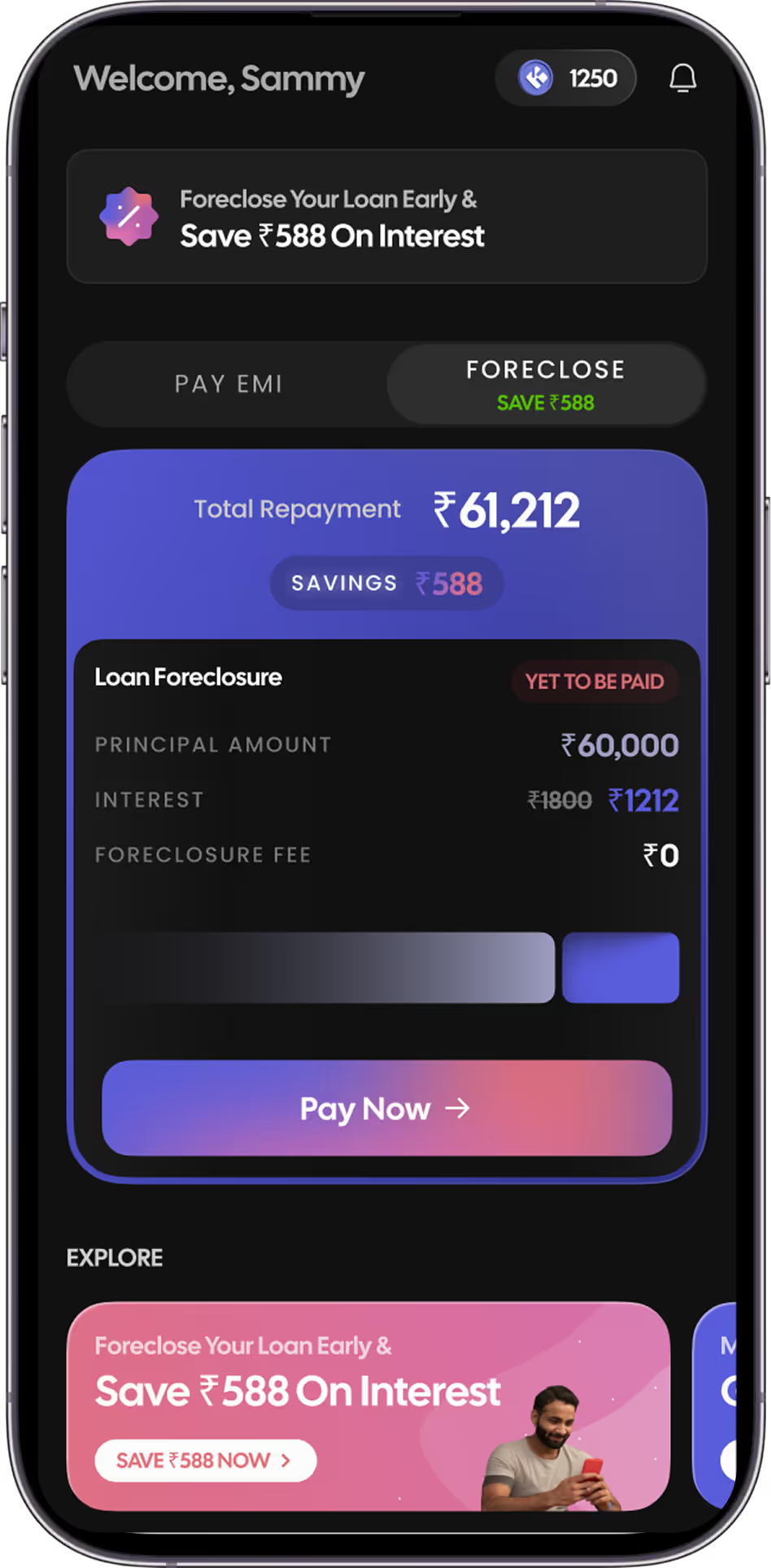
- Whether there's a foreclosure fee if you repay early
- How quickly funds are disbursed once you're approved
Checking your CIBIL score first also helps here. A score above 720 usually opens the door to better personal loan rates, so it's worth a quick check before you start comparing lenders and their offers.
Step 5: Keep A Small Buffer For The Unexpected
There is no such thing as a perfect budget, which is completely normal. A buffer of some amount, ranging between ₹1,000 and ₹2,000 per month, will give you the leeway to accommodate a sudden expense without having to miss an EMI or touch other saved funds.
Small steps count here. A modest buffer built consistently over a few months does more for your financial confidence than a large one you try to save all at once.
Applying For A Personal Loan Online With Klinq
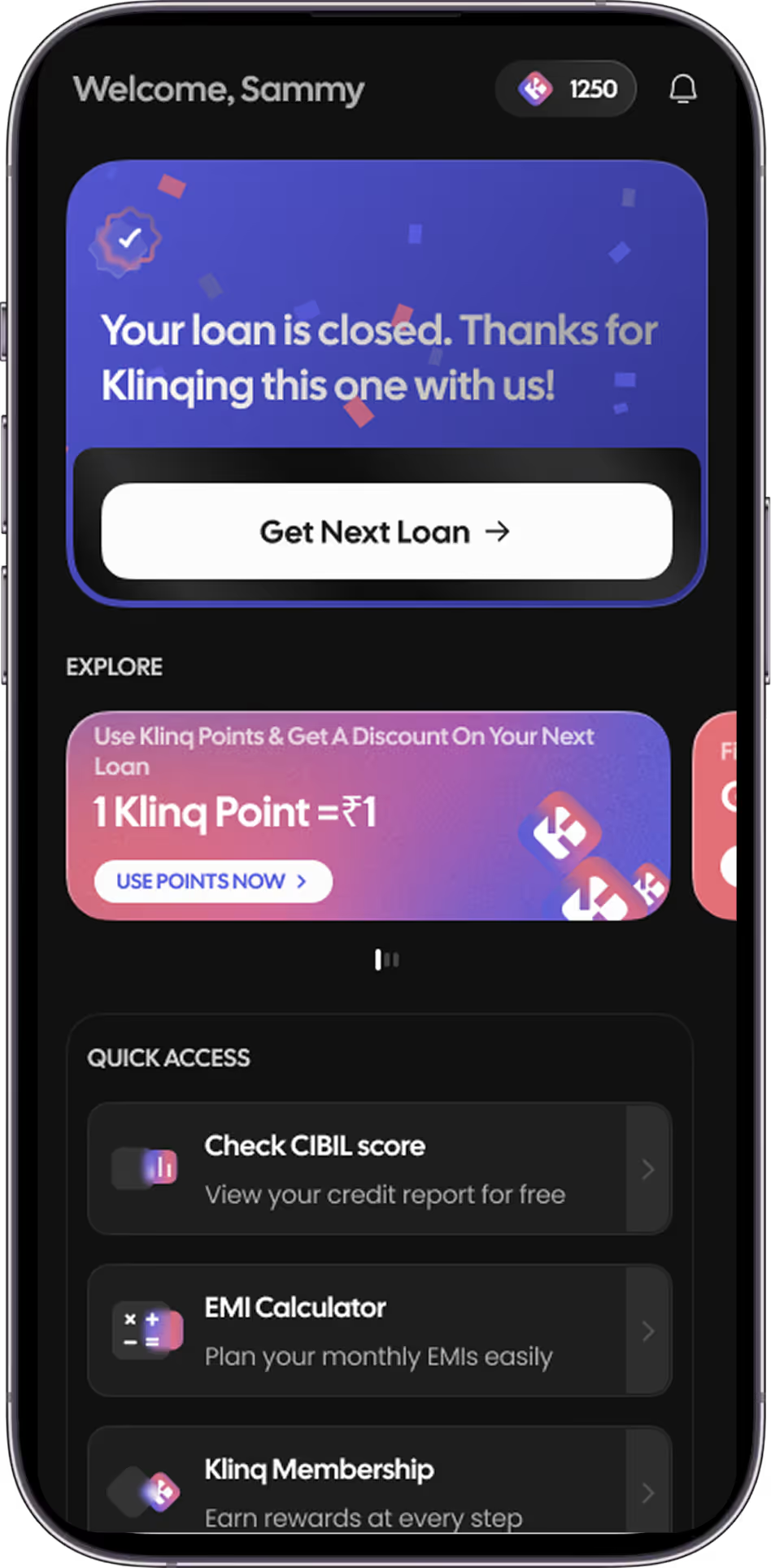
Once your budget is in place, the loan itself can be quick and simple. Klinq offers an instant personal loan of up to ₹50,000 for salaried professionals, with a fully digital process from start to finish.
Here's how it works: you sign up with your PAN and date of birth, get a quick eligibility check based on your CIBIL score, choose your loan amount, and pick an EMI plan that fits the budget you've just built. There are zero foreclosure charges if you want to close your loan early, and no hidden costs along the way.
People searching for personal loan apply online often want to know how fast the process really is. With Klinq, sign-up to approval can take just minutes once your eligibility is confirmed.
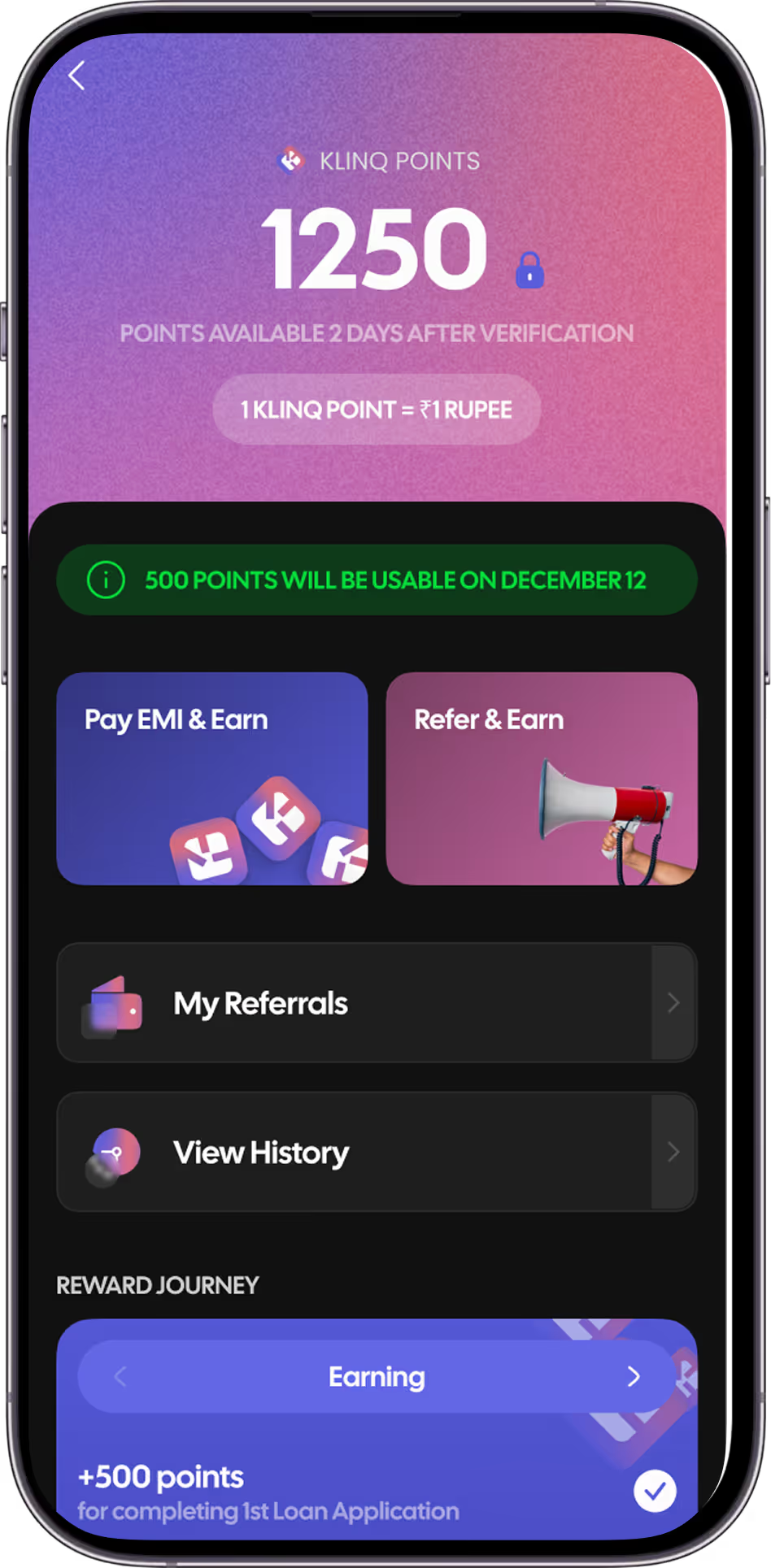
You also earn Klinq Points on your first disbursal and every on-time EMI, which you can redeem later against fees or repayments. It's a small extra reward for the good habit of paying on time, and it fits neatly into the budget you've already built.
Conclusion
For a personal loan to become useful to you, it must be well within the limits of a budget that you are aware of. Note down your income, your fixed costs, record your expenditure for a week, calculate your EMI amount, compare interest rates, and keep a buffer. With all this, you will use your personal loan for progress rather than for a monthly burden.
If you're comparing personal loan apply online options once your budget is ready, Klinq's digital application makes it easy to apply and get funds when you need them most.
FAQs:
1. How much of my salary should go toward a loan EMI?
A common guideline is to keep all your EMIs combined, including any new loan, under 40% of your monthly take-home pay. This leaves enough room for daily expenses and savings.
2. Does my CIBIL score affect my personal loan rates?
Yes. A higher CIBIL score, generally above 720, usually gets you access to better rates and a smoother approval process.
3. How long does a personal loan application take with Klinq?
Klinq's process is fully digital. Once you complete your eligibility check and choose your loan amount, approval and disbursal can happen the same day.
4. What if I want to repay my loan early?
With Klinq, you can repay early without worrying about foreclosure charges, since there are zero foreclosure fees on your personal loan.







.webp)



Carry Klinq
in your Pocket
Apply in minutes, get approved in seconds and manage everything from your phone.


Get started with Klinq
(FORMERLY KNOWN AS SHIVDURGA TRADING PRIVATE LIMITED)

%201.svg)

